VERMONT· PRIVATE PAY · COUPLES & SOMATICBuild your license & your life at the same time.

Individual clinical supervision for post-master's counselors pursuing Vermont LCMHC licensure: with a real focus on couples work, somatic practice, and building a private pay practice that lasts.
“The business side of practice doesn’t have to wait until after you’re licensed. We build that foundation alongside the clinical work, so by the time you have your LCMHC, you’re already on your way.”
THIS IS FOR YOU IF…You got into this field to do meaningful work. You're also starting to wonder if the system you're being funneled into actually makes that possible.
Maybe you've watched burned-out clinicians cycle through agencies. Maybe you're already knee-deep in insurance paperwork wondering how anyone does this long-term. Maybe you just have a quiet sense that there's a different way.
-
You care about accessibility, and you're exhausted by a system that underpays clinicians and underserves clients. Wanting fair compensation is not a betrayal of your values. A well-resourced therapist does better work. Full stop.
-
A caseload you look forward to on Monday morning, not one you're surviving until Friday. Fewer clients, deeper work, real fee sustainability, and a structure that supports your nervous system, not just your billing software.
-
Supervision that takes your clinical development seriously and doesn't ignore the business reality underneath it. Become genuinely skilled and learn to build something that lasts. Those two things are not in conflict.
Here’s Your Permission Slip to Think Differently
The dominant narrative says pay your dues, take the agency job, burn down before you build back up. That's one path, not the only one. You can start building a sustainable private-pay practice now while you're getting licensed.
You don't have to take insurance to serve people well or be accessible
Private pay is achievable in Vermont. It just takes the right foundation
A smaller caseload often means better clinical outcomes
Knowing your worth is a clinical skill, not a luxury
Somatic and relational approaches attract clients ready to do real work
Building your niche now makes everything easier later
What We Offer
Clinical excellence and a practice that fits your life.
Two tracks, simultaneously: the clinical track, where you develop real skill and confidence, and the practice track, where we lay the foundation for something sustainable.
The Clinical Track

Gottman Method lens for couples, Brainspotting for somatic and trauma-informed work, attachment framework for what's happening in the room. Especially suited for clinicians drawn to relational and embodied practice.Case conceptualization: Gottman, somatic, and attachment frameworks
Couples work: alliance, conflict, ambivalence, betrayal
Somatic awareness and Brainspotting-informed presence
Countertransference and parallel process
Complex presentations: trauma, infidelity, neurodivergence
Documentation, ethics, clinical decision-making
The Practice Track

Most supervision doesn't touch the business side and that gap shows up later. We cover niche, fees, marketing, structure, and the money psychology that trips up almost every early-career clinician. You'll finish your supervised hours with your LCMHC and a practice foundation already in place.Private pay: positioning, pricing, and mindset
Niche development: easier to find, harder to leave
Caseload design for depth, not volume
Simple marketing: website, directories, referrals
Setting fees with confidence and holding them
Practice structure that supports your life
Frequently Asked Questions
-
Monthly Package — $500 / month
Includes unlimited Voxer for business questions. The kind of between-session support that helps you actually integrate what you're learning.
Unlimited Voxer for business
24/7 access for clinical questions
Consistent relationship. I know you and your cases
Business and clinical guidance, not just clinical hours
Space to bring the things you don't say out loud elsewhere
Individual Sessions — $150 / session
Via HIPAA-compliant telehealth or in-person, counting toward Vermont LCMHC licensure at the 1:30 ratio. Honest, direct feedback from someone genuinely invested in your development.
Counts toward VT LCMHC at 1 hour per 30 practice hours
Clinical and practice track every session
Gottman, Brainspotting, somatic, attachment frameworks
Written hour documentation always provided
-
Yes. You can see private pay clients on the Vermont Roster. Starting to build your niche and positioning now means you're well ahead of where most clinicians start when they get licensed.
-
You don't have to be fully committed. I work best with clinicians who are at least curious about relational and somatic approaches, even if couples isn't your primary focus.
-
It is, with the right niche, positioning, and relationship to your own fees. That's exactly what the practice track is for. My practice makes over six figures with client work alone. I will also be able to funnel you, clients, when I am at capacity.
-
A small number, up to six, by design. I'm not running a supervision mill. I want to actually know your work and your clients. Openings come up occasionally, which is why a consult call is the right place to start.
-
100 total face-to-face hours, at least 50 individual, alongside 3,000 practice hours (2,000 direct) over a minimum of two years. One supervision hour per 30 practice hours.
“I want to work with clinicians who are a little bit renegade: who care deeply about their clients, and who also refuse to accept that burning out is just part of the deal.”
Get In Touch
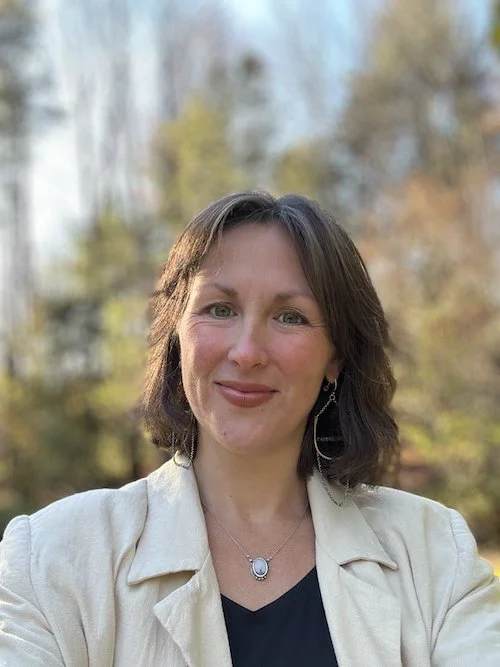
ABOUT KALI
I'm a Vermont-licensed LCMHC with a private practice in Montpelier specializing in couples work. I'm drawn to clinicians who care about doing excellent work and who are also thinking carefully about how to build something sustainable, because those two things go together more than our field tends to acknowledge.
Gottman Method Level 3: one of the very few Vermont clinicians at this level, working toward full certification
Brainspotting trained: somatic and nervous-system-informed practice woven through how I work and supervise
Private practice owner: solo private pay practice in Montpelier, built without insurance panels
200-hour YTT founder, longtime somatic practitioner, embodiment is central to my clinical approach